

Peer review is a promise made in private. A scientist agrees to read someone else’s work closely, judge it on the evidence, declare anything that could colour that judgement, and keep the exchange confidential. On August 3, 2026, the Commission on Research Misconduct at Goethe University Frankfurt declined to open proceedings on my complaint about how that promise was kept in the review of our paper. On September 25, 2026, it told me the decision is final. Here is the record, so you can judge for yourself.
The paper in question is ours: David J. Speicher, Jessica Rose and Kevin McKernan, “Quantification of residual plasmid DNA and SV40 promoter-enhancer sequences in Pfizer/BioNTech and Moderna modRNA COVID-19 vaccines from Ontario, Canada,“ published in Autoimmunity on September 6, 2025. It is a peer-reviewed paper on which the publisher has placed an “under investigation” notice. The reviewer was Prof. Rolf Marschalek of Goethe University Frankfurt, as Retraction Watch made public on November 21, 2025. I make no claim about his motives. I put his words, and the institution’s answer, on the public record.
Why Peer Review Matters
Peer review works like this. An author submits a manuscript, and an editor decides whether to send it out. If so, the editor invites experts, usually two or three, to review it. Each reviewer writes a report and recommends acceptance, minor or major revision, or rejection. The authors answer every point, revise the manuscript, and the editor makes the final decision. In single-blind review, reviewers know who the authors are, but not the reverse. In double-blind review, neither side knows the other. In open review, the reviewers’ names, and often their reports and the authors’ replies, are published with the article.
I welcome peer review. It is a chance to make sure my work is solid before the public scrutinizes it. A good reviewer offers constructive criticism with one goal: a better, more polished paper. It also has a second duty: to stop poor science before it reaches the published literature. That duty matters more than ever now that anyone can analyze their own or other people’s data and produce a complete manuscript without doing any of the work themselves.
Good science is measured, reproducible and open to challenge. Peer review is where that challenge begins, before a paper reaches the public. A reviewer can catch an error, demand a control, or show that a conclusion goes further than the data allow. That serves the authors and every reader who later relies on the work.
The process only works if it is fair. Authors hand over unpublished work to a stranger they cannot see or answer directly, and the editor relies on that stranger’s judgement. If the reviewer has a stake in the outcome, or treats the review as a platform rather than a duty, the check becomes a weapon. Nobody outside the process would ever know, unless the documents are made public.
The Rules Every Reviewer Accepts
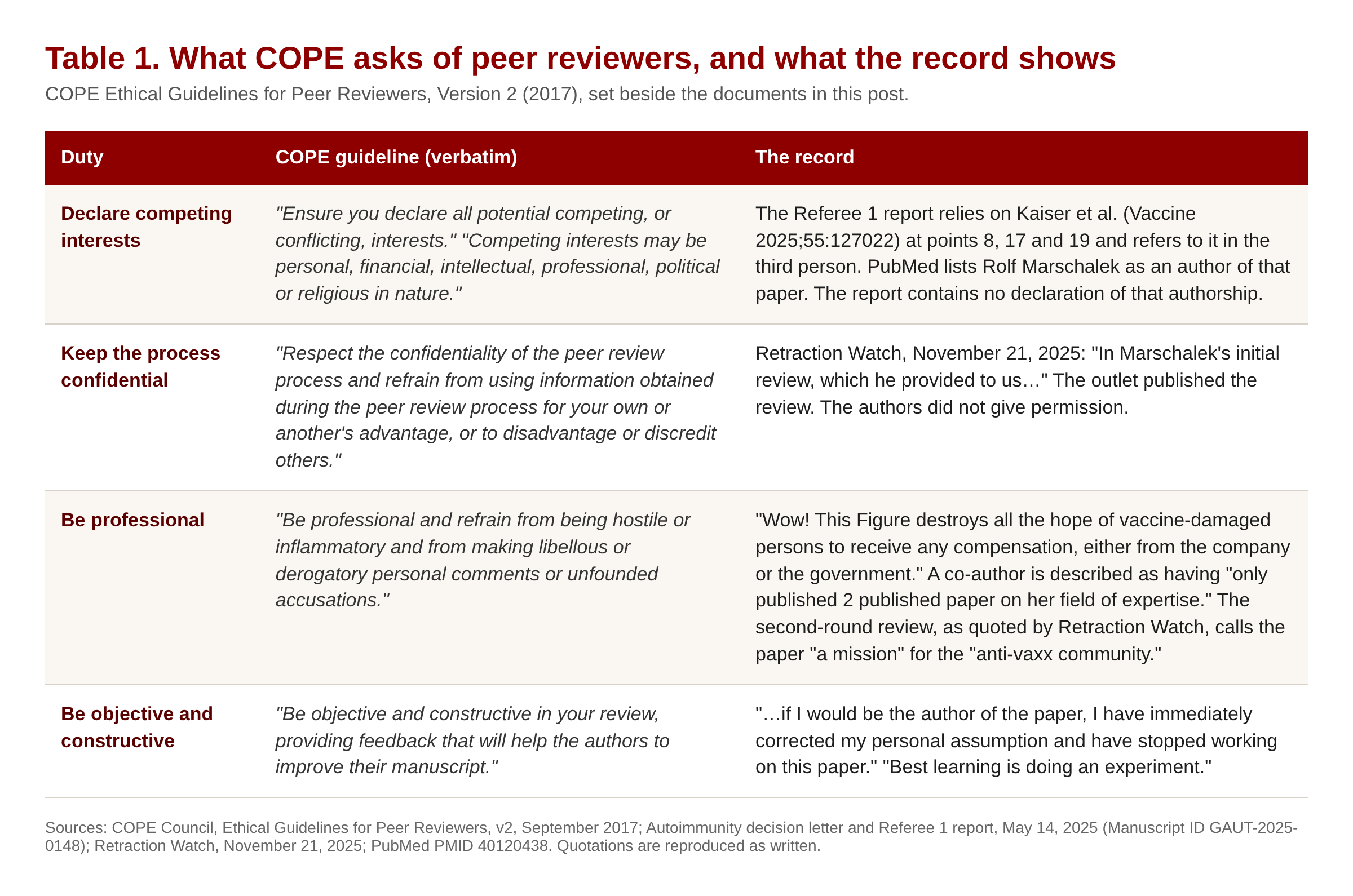
The Committee on Publication Ethics (COPE) sets the standard most journals follow, including Taylor & Francis, which publishes Autoimmunity. The COPE Ethical Guidelines for Peer Reviewers (Version 2, 2017) are short and plain. Reviewers must “declare all potential competing, or conflicting, interests,” and the guidelines add that “Competing interests may be personal, financial, intellectual, professional, political or religious in nature.” Reviewers must also “Respect the confidentiality of the peer review process and refrain from using information obtained during the peer review process for your own or another’s advantage, or to disadvantage or discredit others.”
The guidelines also govern tone. Reviewers are told to “Be objective and constructive in your review, providing feedback that will help the authors to improve their manuscript,” and to “Be professional and refrain from being hostile or inflammatory and from making libellous or derogatory personal comments or unfounded accusations.” The table below sets each duty beside what the documents show.
The Gate Before the Review
Peer review can fail before it begins. An editor can reject a manuscript without sending it to a single reviewer, and the authors never learn why. In December 2024, we submitted this manuscript to three MDPI journals. Vaccines received it on December 1, 2024, and rejected it four days later without peer review. Biomedicines, whose editorial board I had been invited to join, received it on December 6, 2024, and rejected it four days later in the same way. The International Journal of Molecular Sciences rejected it unreviewed that same month, even after I told the processing editor that an assistant editor of that journal had agreed it would go out for review.
MDPI is a commercial open-access publisher that depends on article processing charges, which were CHF 2,700 for a paper in Vaccines at the time. It has backed the OpenPharma statement on open access, an initiative of pharmaceutical companies, which are major funders of the research it publishes. Cureus also declined our manuscript. Not one of those four decisions put our data in front of a reviewer.
Gatekeeping and a conflicted review are two sides of the same failure. The first keeps sound work away from reviewers, and the second tries to keep it away from readers. Our manuscript reached reviewers only when Dr. Panagis Polykretis, Guest Advisor for an Autoimmunity special issue on autoimmune inflammatory reactions following genetic vaccination, invited us to submit it. A few weeks after our paper was published, that special issue was terminated.
“This Figure Destroys All the Hope”
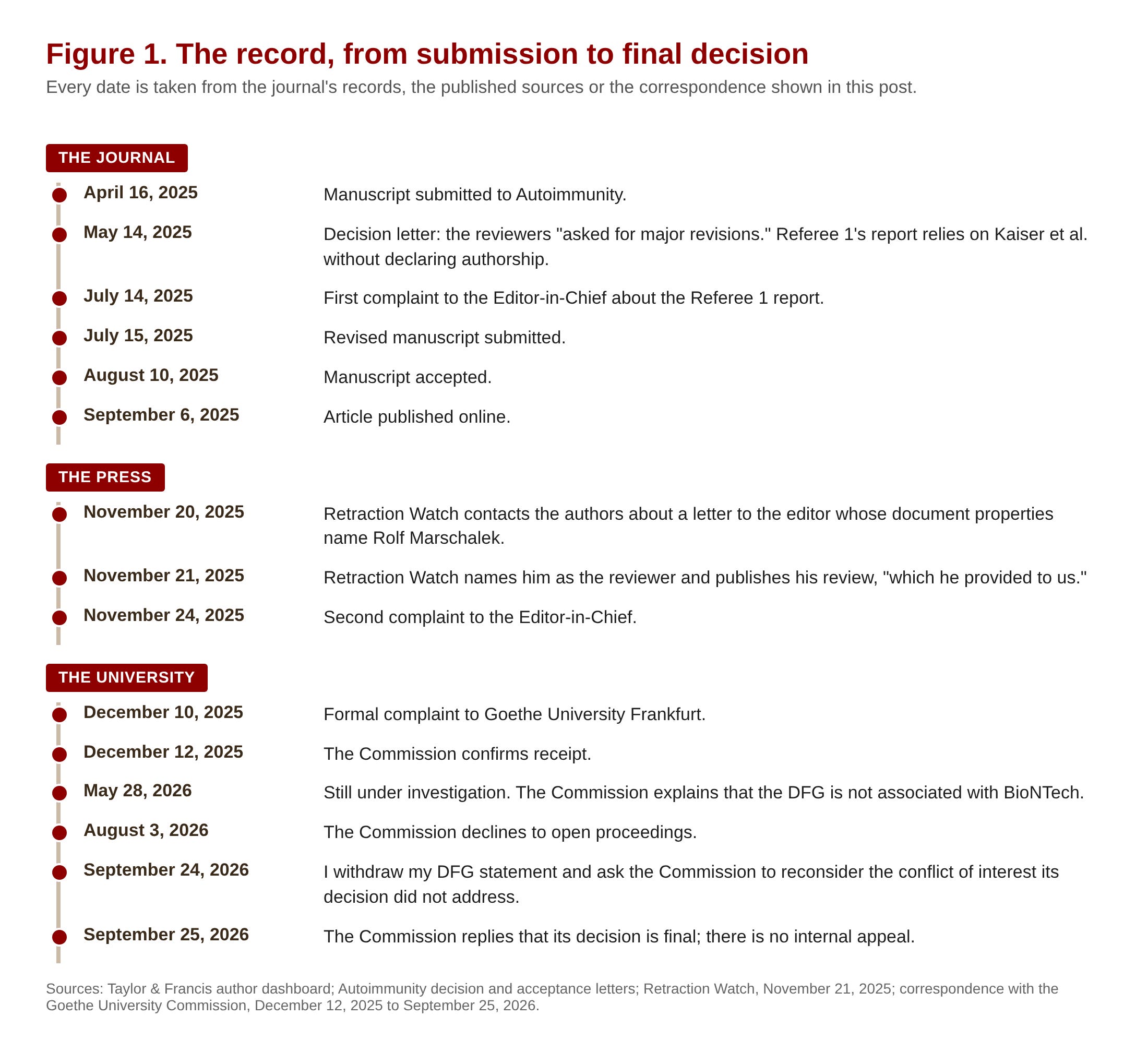
We submitted our manuscript to Autoimmunity on April 16, 2025. On May 14, 2025, the Editor-in-Chief wrote that the reviewers “had major reservations concerning several issues in your manuscript and asked for major revisions.” Referee 1’s report raised real scientific questions, and we answered every point in a detailed 21-page response. The referee’s comments also contained language that, in my assessment, no reviewer should put before authors.
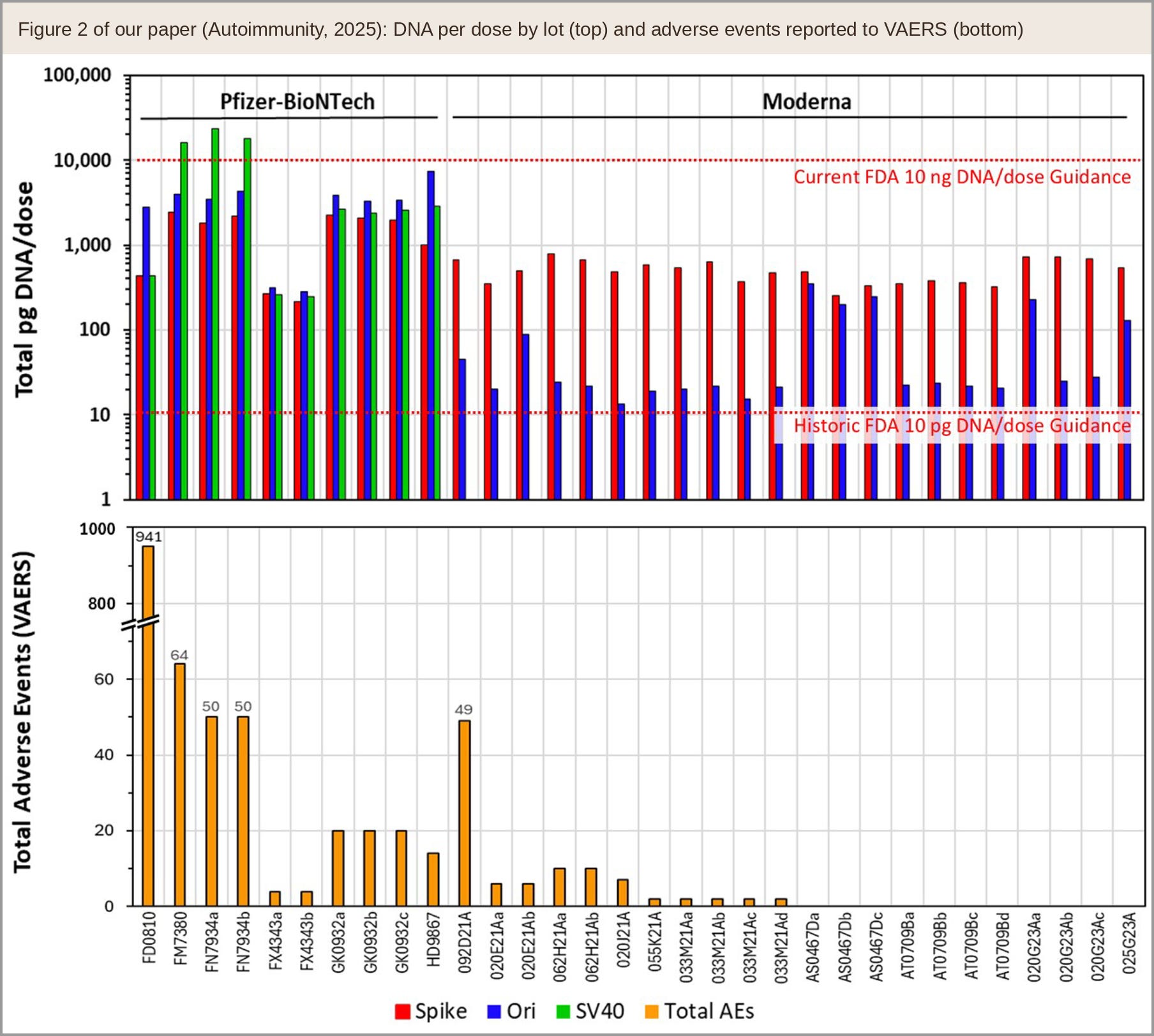
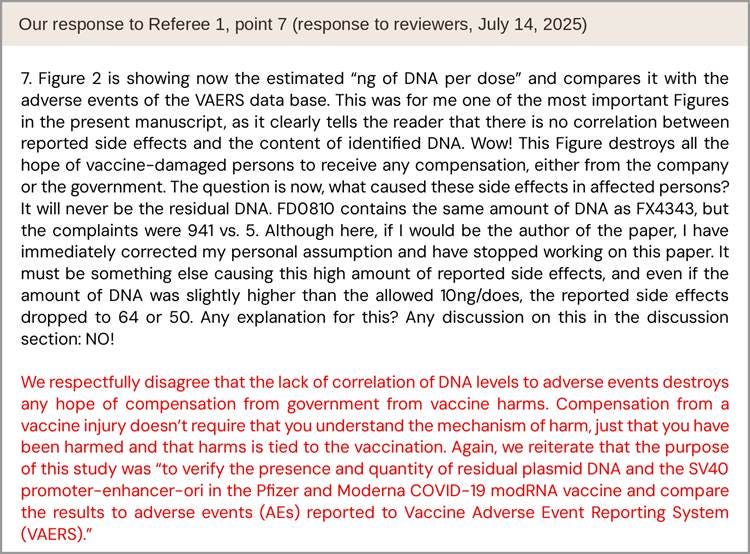
The report opened by assessing the authors rather than the work. This is why many journals use double-blind review: reviewers who do not know the authors can judge only the methods and data. The report described one co-author as having “listed many preprints on their ORCID account but has only published 2 published paper on her field of expertise.” Commenting on our comparison of DNA content with reported adverse events, it said: “Wow! This Figure destroys all the hope of vaccine-damaged persons to receive any compensation, either from the company or the government.” It told us that, in our place, “I have immediately corrected my personal assumption and have stopped working on this paper.” It closed with: “Best learning is doing an experiment.”


The remark concerned Figure 2 of our manuscript, which set the DNA content of each lot beside the adverse events reported for that lot to the US Vaccine Adverse Event Reporting System (VAERS). We replied that compensation for a vaccine injury does not depend on knowing the mechanism of harm, only on showing that the harm is tied to vaccination. We also added a paragraph on the lot he singled out, FD0810, which had the most reports but lower spike and SV40 promoter-enhancer-ori levels than comparable vials. It states that more vials must be tested to confirm any correlation, and that factors beyond plasmid DNA may contribute to adverse events.
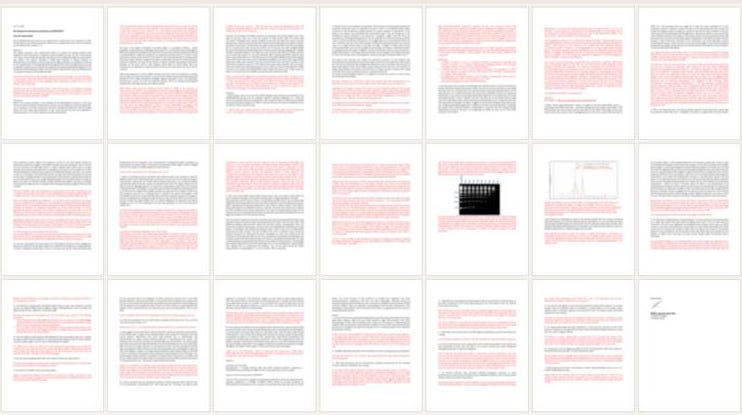

The report also leaned heavily on one paper, a paper the referee co-authored himself. At point 8 it said the problems with fluorometric DNA measurement had been “nicely demonstrated by the recent paper from Kaiser et al. in the Vaccine Journal.” At point 19 it said: “If the authors don’t believe the reviewer, then please repeat the procedure as published by Kaiser et al.” The report refers to that paper in the third person throughout. PubMed lists its authors as Stefanie Kaiser, Steffen Kaiser, Jenny Reis and Rolf Marschalek, all of Goethe University Frankfurt.
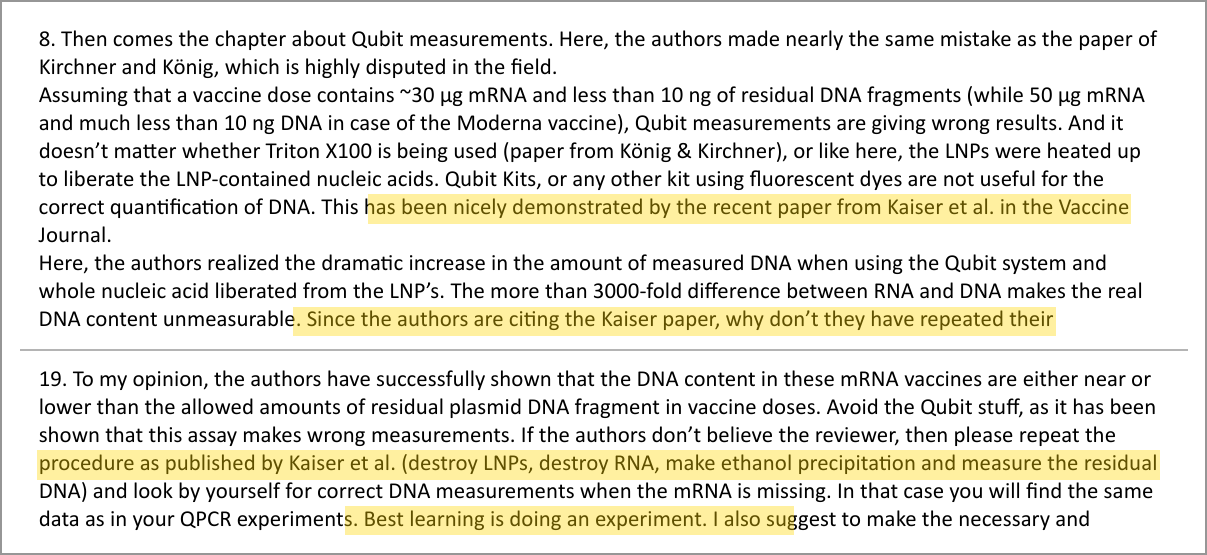
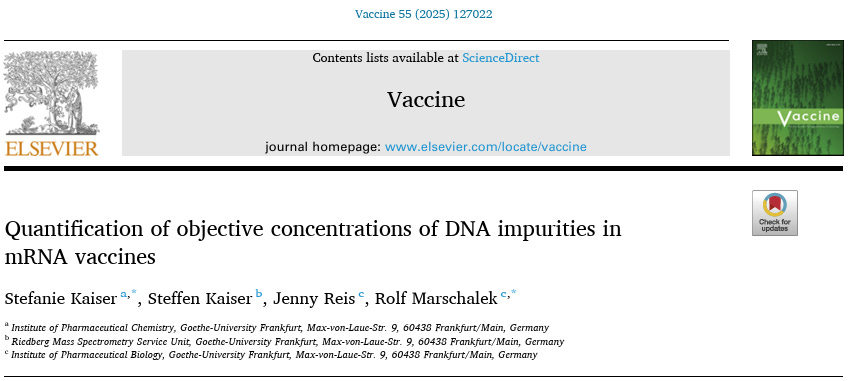
Our manuscript disputed the method of that paper. The reviewer was therefore judging work that challenged his own published method, and he asked us to adopt that method or remove the data that conflicted with it. Nothing in the report tells the editor or the authors that the reviewer is one of its authors. That is an intellectual and professional interest of exactly the kind COPE lists, and in my opinion, it should have been declared.
Point 8 shows how thoroughly we answered. The reviewer wrote that “Qubit Kits, or any other kit using fluorescent dyes are not useful for the correct quantification of DNA,” and told us to repeat the method of Kaiser et al. or leave our Qubit data out. Our answer ran to nearly three pages. We explained that the dye does not bind the single nucleotides left after RNase A digestion, and pointed to the time course showing that the digestion was complete. Kevin McKernan also ran new laboratory tests: a gel showing that a common bead clean-up loses DNA fragments shorter than 300 base pairs, and an electropherogram showing that ethanol precipitation, the step Kaiser et al. relied on, lost a large share of the DNA in a size ladder.
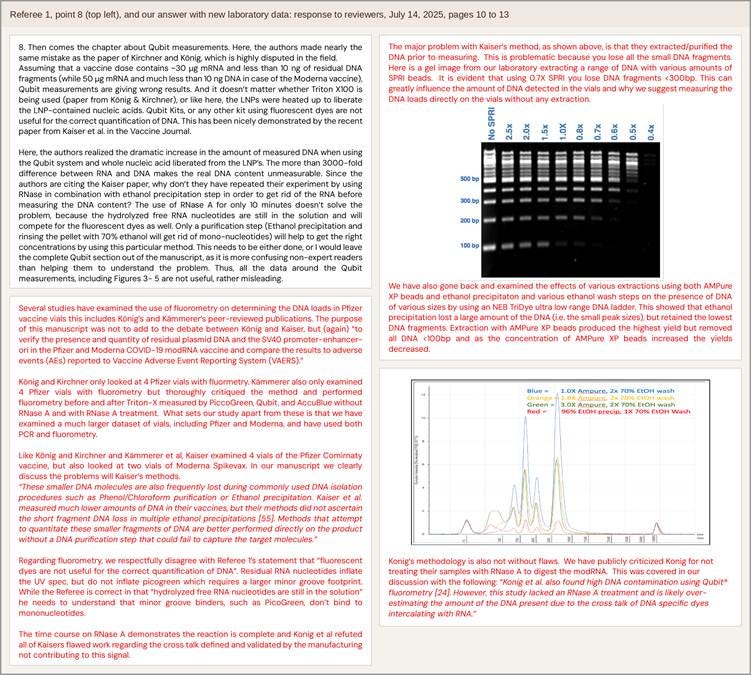
With our revision, on July 14, 2025, we wrote to the Editor-in-Chief about the report’s tone and bias, stating that Referee 1’s comments “exhibit bias, unprofessional, defamatory, and lack the scientific constructiveness expected in peer review,” and that “Referee 1 begins by scrutinizing the bibliography of the authors, making subjective and derogatory judgments about our qualifications.” We asked the editor to “evaluate our manuscript considering these concerns to ensure a fair and impartial process.” The journal sent our revised manuscript back out for review on July 19, 2025. Its acceptance letter of August 10, 2025 stated: “Our editorial board member(s) and referee(s) have now considered your revised submission and have recommended publication in Autoimmunity.” My judgement of the report is plain: its personal remarks and its undisclosed reliance on the reviewer’s own work were unprofessional.
The Review Goes to the Press
On November 20, 2025, a journalist from Retraction Watch contacted us about a letter to the editor criticizing our published paper. The document properties of the file she sent named its author as Professor Rolf Marschalek and gave its creation date as September 26, 2025. The next day, Retraction Watch published “Exclusive: Reviewer recommended against publishing paper on DNA in COVID vaccines.” It named him as the reviewer and posted his report.
My co-authors put their answers on the record before that article appeared. On November 21, 2025, Jessica Rose asked how a journalist came to hold reviews that the authors are bound to treat as confidential. The same day, Kevin McKernan showed that the letter’s two technical objections had already been answered in review. We had used 20 µg of RNase A, 300 to 500 times more than needed to digest the RNA in the sample, with a time course showing the digestion was complete, and the letter’s assumed ratio of 3,000 parts RNA to one part DNA came with no source. On November 22, 2025, Jessica Rose showed that the document properties of the letter named Prof. Marschalek, and that the copy Retraction Watch later posted had been renamed and stripped of that information.
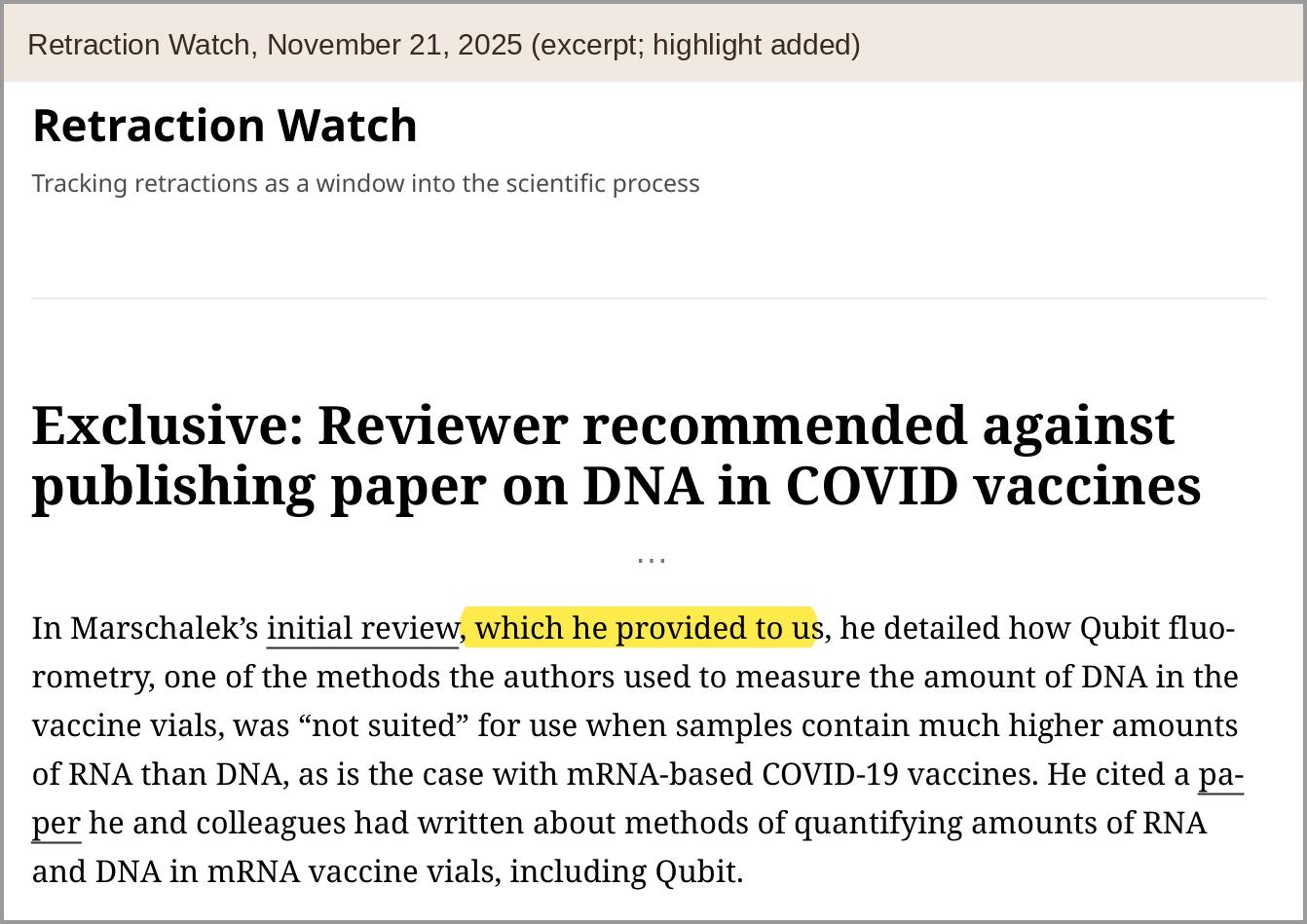
The article states the source plainly: “In Marschalek’s initial review, which he provided to us.” It also quoted his review of our revision: “Thus, the revised version of the authors have strengthened my opinion that the whole paper is ‘a mission’ for the ‘anti-vaxx community’ and not a scientific paper.” The journal never sent us that second review; we first read it in a news article. A good scientist makes careful observations, asks difficult questions, and follows the evidence where it leads, not where the payment wants it to go.
The same article recorded a discrepancy. The Editor-in-Chief told Retraction Watch that Prof. Marschalek “did not recommend rejection of the paper” and had recommended “major revision,” and that our revised manuscript and response letter “were deemed by the AE to have properly addressed the issues.” Readers were told the reviewer had recommended against publication, while the journal’s own editor said the first review asked for revisions. A confidential process had become a public argument, conducted by one side, using documents the other side was bound to keep private.
Why I Filed a Complaint
On November 24, 2025, I wrote a second time to the Editor-in-Chief. On December 10, 2025, I filed a formal complaint with the President of Goethe University Frankfurt and its Commission on Research Misconduct, and the Commission confirmed receipt on December 12, 2025. The complaint raised three concerns: the disclosure of the confidential review, an undisclosed conflict of interest, and the unprofessional content of the review itself.
One part of my complaint concerned funding. I stated that Prof. Marschalek had an affiliation with the DFG and that the DFG was associated with BioNTech development. On May 28, 2026, the Commission replied that the DFG is Germany’s research funding organization and is not associated with BioNTech SE. I withdrew the DFG statement from my complaint so the Commission would rule on the one conflict it could examine, my reviewer’s authorship of Kaiser et al. The funding questions remain open, and I will put the documents on the record when I have them. Kevin McKernan has set out the funding links he sees between the DFG, BioNTech and the reviewer, and Jessica Rose has written that the reviewer has many conflicts of interest.

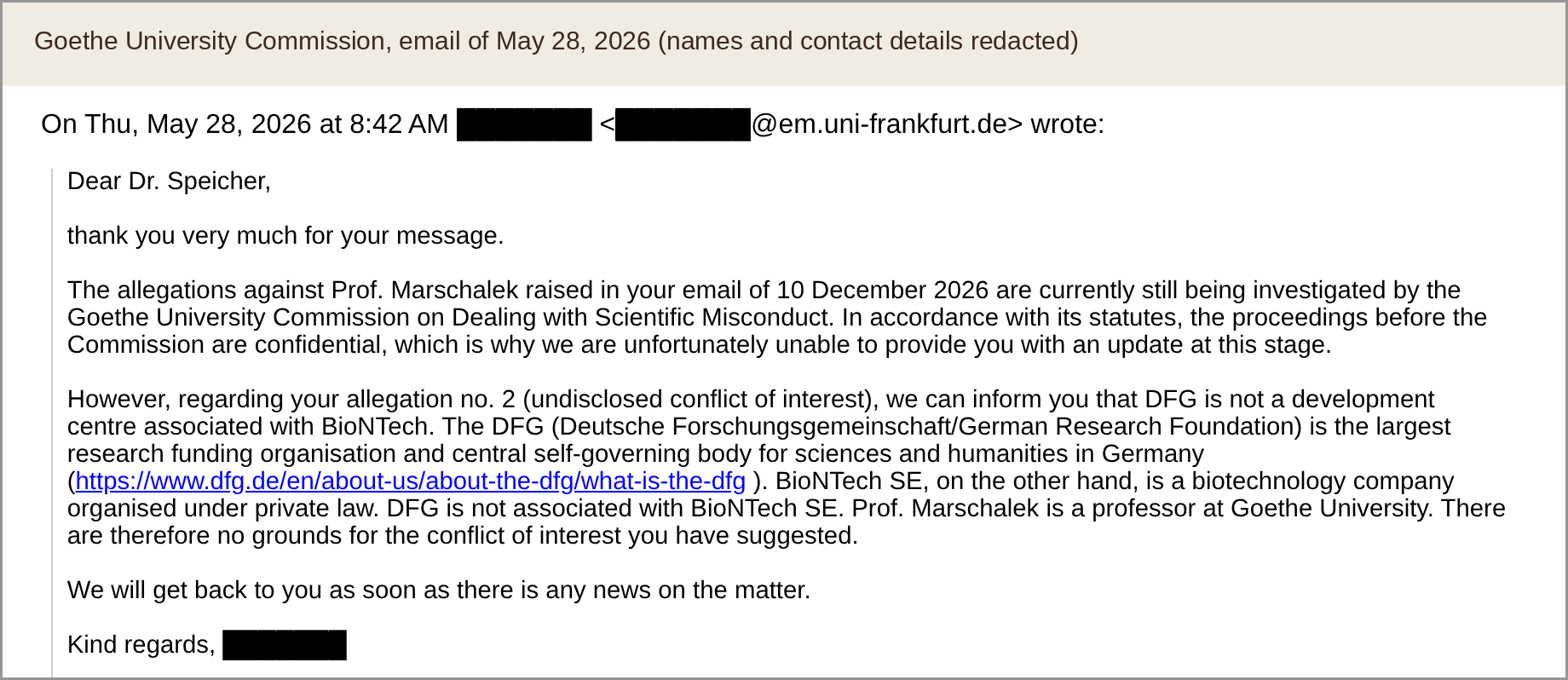
The conflict that remains is the one documented above: a reviewer relying on his own paper, in the third person, to tell us how to measure DNA. That is a question of disclosure, not money.
What the Goethe University Commission Decided
On August 3, 2026, the Goethe University Commission informed me that it found no sufficient suspicion of research misconduct and would open no proceedings. It considered only one ground: the disclosure of the review report to Retraction Watch. It said it was unclear whether the publisher’s confidentiality obligation applied after publication, and took the view that disclosing a review after publication is more likely an expression of opinion within scholarly debate. It added that its statutes allow it to act only on an infringement of intellectual property or an impairment of another person’s research, and it found neither.
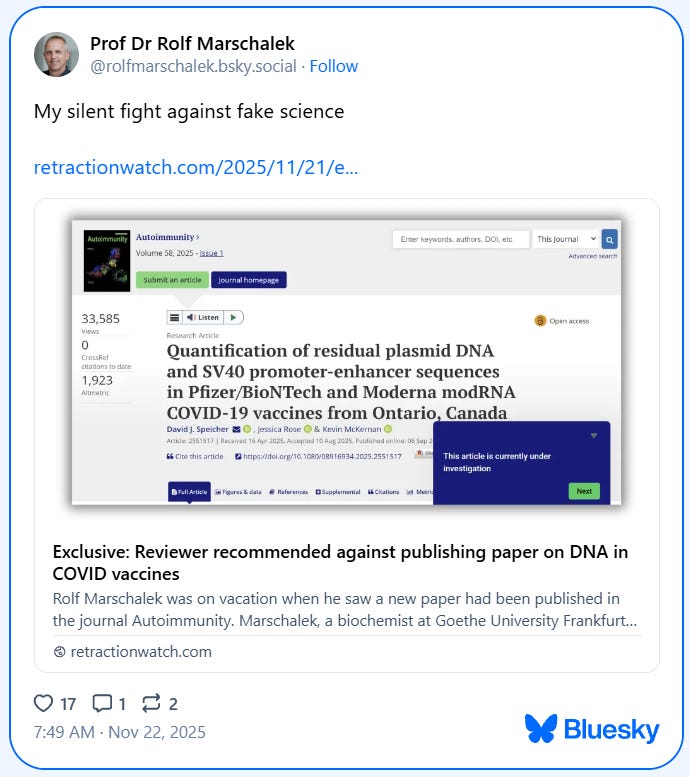
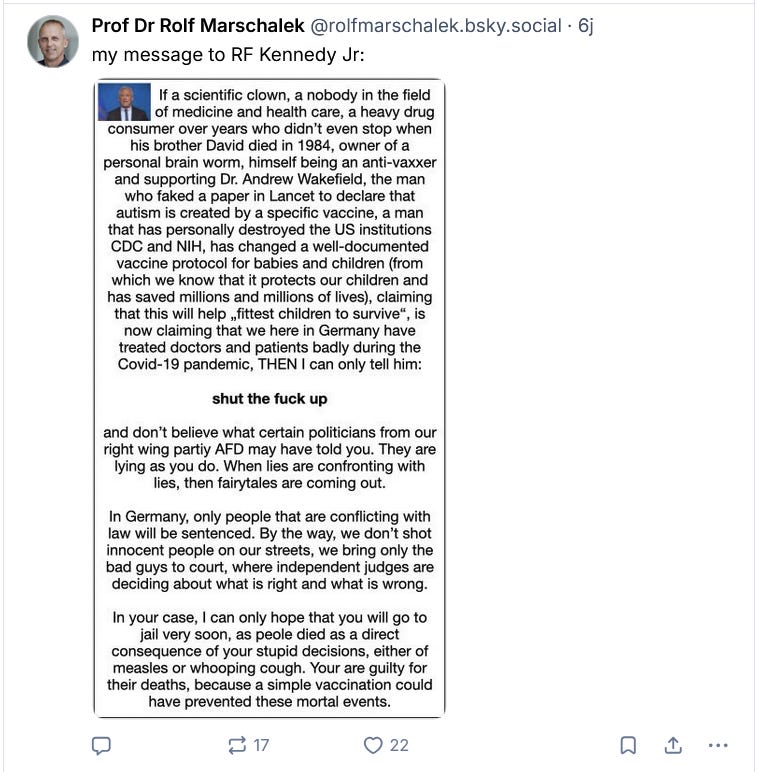
I welcome an open debate with Prof. Marschalek, in print and on the record. What I object to is his conduct. His review judged a co-author by her publication record instead of judging the work, and after our paper was published, he gave that review to a journalist. On November 22, 2025, he shared the Retraction Watch article on Bluesky under the words “My silent fight against fake science,” as Jessica Rose documented. In January 2026, she documented a Bluesky post in which he told the US Secretary of Health and Human Services to “shut the f*** up” and wrote, “I can only hope that you will go to jail very soon.” Disagreement is the work of science. Attacking the people who disagree is not.
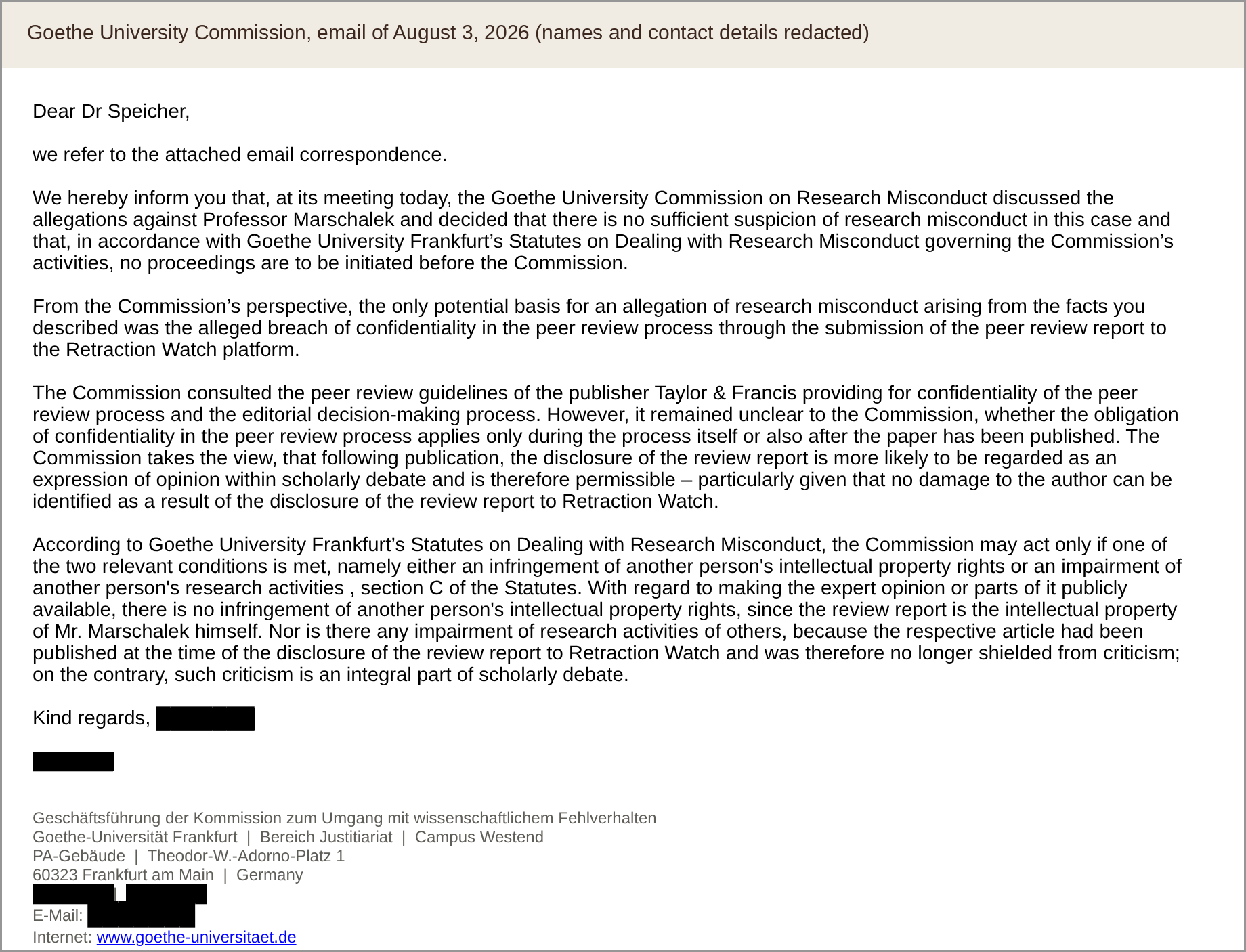
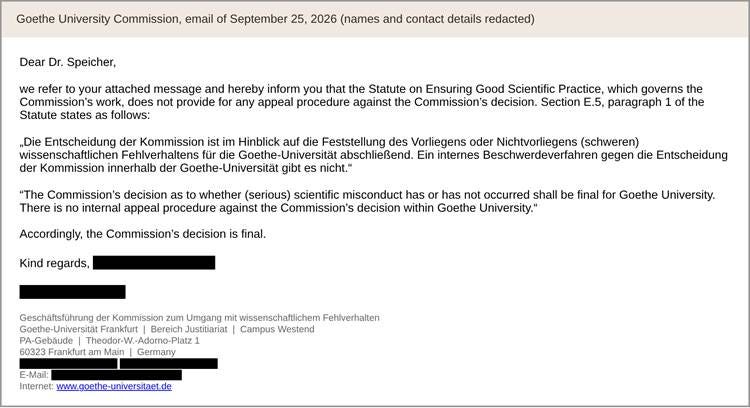
The decision did not address the conflict of interest at all. On September 24, 2026, I asked the Commission to reconsider on that ground alone, and asked it to establish one fact I cannot: whether Prof. Marschalek declared his authorship of Kaiser et al. to the journal. On September 25, 2026, the Commission replied that its statute provides no appeal and its decision is final within the university.
Under Goethe University’s statutes, a reviewer may give a confidential review to the press once a paper is published, and the question of whether a reviewer must declare that he wrote the paper he is promoting, or using against the authors under review, is never examined. The Commission said no damage to the author could be identified. Our paper still carries a publisher’s investigation notice, and the press published the review before we had seen the second-round report. I answered the publisher’s questions on December 9, 2025, and have heard nothing since. On September 24, 2026, I asked Taylor & Francis for the status of its investigation, for any remaining concerns in writing, and for the notice to be removed or replaced with the outcome. There has been no response from the editors. After more than a year, it is near impossible to get the status of the investigation changed, and it does not appear to be a transparent or impartial investigation. The authors of the next paper have no better protection than we had.
Peer Review That Follows the Evidence
None of this changes the levels of residual plasmid DNA and SV40 promoter-enhancer sequences that I personally measured in the vials of Pfizer and Moderna COVID-19 modRNA vaccines. Our work shows that the method used to measure DNA in these vaccines decides the result, and that flawed methods give inaccurate results. Kaiser et al. extracted and purified the DNA before measuring it, a step that loses short fragments, while we measured directly in the vial.
A review that requires every author to use the reviewer’s method, and to reach his conclusion that DNA levels sit within regulatory limits, before a paper can be published is not science. The field needs papers that measure the DNA in several different ways, so the methods can be compared in the open. The work of Kämmerer, Schulz and Steger is a good example. Testing four lots of Comirnaty in Germany, they found 32.7 to 43.4 ng of DNA per dose after RNase A treatment. Like ours, every lot exceeded the 10 ng limit, and like us, they measured the DNA without the extra ethanol precipitation step that Kaiser et al. added.
We answered every critique point by point, in a 21-page response of about 8,200 words that covered all 19 numbered points from Referee 1 and every point from Referee 2 and included a gel from our laboratory showing how a common purification step loses DNA fragments shorter than 300 base pairs.
What this case shows is that the rules meant to protect the confidentiality of peer review, a process that should be sacred to every scientist, have no one to enforce them once a review leaves the journal.
The stakes reach beyond one journal. Kaiser et al., which lists Prof. Marschalek as a co-author, is the only study the European Medicines Agency’s letter of September 3, 2025 (EMA/286067/2025) cites against Qubit testing of the final product. This is a matter of public interest. In the same letter, the agency told Dr. Silvia Behrendt that “to date, EMA has not seen any reliable scientific evidence of DNA exceeding approved levels for either of the concerned COVID-19 vaccines.” A regulatory position that affects everyone who received these vaccines rests, in that letter, on a single paper whose method our work disputes, co-written by the reviewer of our paper. That paper is less certain than the letter that relies on it: its own discussion reports “a DNA content below and in some analyses 1.8-fold above the accepted quantities.”
Dr. Silvia Behrendt, Prof. Klaus Steger and I set out the wider record in the Transparency4Safety Initiative’s Overriding Public Interest Report on the undeclared SV40 sequences in Comirnaty, published on October 12, 2026. It shows that Kaiser et al., Achs et al. and Nitta et al. have been “invoked to support the position advanced by BioNTech/Pfizer and regulatory authorities,” and that their analyses “require substantive consideration.” The report also records that, after RNase treatment and ethanol precipitation, Kaiser et al. reported “DNA impurities ranging from ~35 ng (Comirnaty) and ~ 55 ng (Spikevax) per vaccination dose,” which is 3.5 and 5.5 times the 10 ng per dose limit.
Peer review should follow the scientific facts, not the reputation of the authors, the politics of the topic, or the reviewer’s stake in a competing result. Editors should send methodologically sound work to reviewers rather than reject it unread, and give reasons when they do not. Journals should require a written declaration of competing interests from every reviewer, including intellectual ones, and publish it if a review is ever made public. This case shows why peer review needs more transparency, not less. In open peer review, the reviewers’ reports and the authors’ replies are published with the article, so readers can weigh each objection against its answer. Had our review been open, no reviewer could have taken his half of the exchange to the press and left ours out. Confidentiality should protect authors as well as reviewers, and publishers should say plainly whether it ends at publication. Using a confidential review against the authors who received it, while relying on an undisclosed paper of one’s own, is a breach of scientific integrity and of the integrity of peer review. Universities should be able to examine undisclosed conflicts, not only intellectual property and impaired research.
I asked for one fact and was told the matter is closed. The Commission never asked me a question, never told me what evidence it examined, and never gave me a chance to respond before it decided. There was no transparency and no discussion.
The record is now open. Anyone can read the review, the complaint and the decision, and ask the question the Commission did not: should a reviewer declare that he wrote the paper he tells you to follow? My answer is yes, and I will keep asking it until a journal, a university or a regulator answers it on the record.
References
1. Speicher, D.J., Rose, J. and McKernan, K. (2025) ‘Quantification of residual plasmid DNA and SV40 promoter-enhancer sequences in Pfizer/BioNTech and Moderna modRNA COVID-19 vaccines from Ontario, Canada‘, Autoimmunity, 58(1), 2551517.
2. Kaiser, S., Kaiser, S., Reis, J. and Marschalek, R. (2025) ‘Quantification of objective concentrations of DNA impurities in mRNA vaccines‘, Vaccine, 55, 127022.
3. Kämmerer, U., Schulz, V. and Steger, K. (2024) ‘BioNTech RNA-Based COVID-19 Injections Contain Large Amounts of Residual DNA Including an SV40 Promoter/Enhancer Sequence‘, Science, Public Health Policy, and the Law, v5.2019-2024, December 2024.
4. COPE Council. Ethical Guidelines for Peer Reviewers, Version 2. Committee on Publication Ethics, September 2017.
5. Autoimmunity, Editor-in-Chief. Decision letter and reviewer reports, Manuscript ID GAUT-2025-0148, May 14, 2025.
6. Retraction Watch. “Exclusive: Reviewer recommended against publishing paper on DNA in COVID vaccines.” November 21, 2025, updated November 24, 2025.
7. European Medicines Agency. EMA/286067/2025, letter to Dr. Silvia Behrendt, Global Health Responsibility Agency. September 3, 2025.
8. Behrendt, S., Speicher, D.J. and Steger, K. (2026) ‘Overriding Public Interest Report Concerning Undeclared SV40 Sequences in Comirnaty’s Manufacturing Plasmid‘, Transparency4Safety Initiative, October 12, 2026.
9. Speicher, D.J. (2025) ‘Pharma-controlled publisher rejects critical study finding plasmid DNA in COVID-19 vaccines after agreeing to peer-review‘, Courageous Truth, January 23, 2025.
10. Autoimmunity authors (Speicher, D.J., Rose, J. and McKernan, K.). Response to reviewers’ comments on manuscript #252538207, July 14, 2025 (21 pages).
11. Goethe University Frankfurt, Commission on Research Misconduct. Correspondence, December 12, 2025; May 28, 2026; August 3, 2026; September 25, 2026.
Support Independent Scientific Oversight
Scientific data and regulatory records belong in public view. All of our core genomic findings, peer-reviewed data and regulatory analyses will remain free and accessible to the public.
Independent molecular testing, and the work of answering critics and holding the review process to its own rules, require independent funding. If you value this work, please consider upgrading to a paid Substack subscription. Your support keeps this record free for the families, clinicians and lawmakers who use it.
Deploy the Blueprint & Hold the Line
Share the Evidence: If you edit or review for a journal, share the COPE table in this post with your colleagues and follow those guidelines in every review, including declaring any paper of your own that you cite. If you are not a scientist, keep these issues in mind when you hear that a study was “peer reviewed”: some peer review is flawed, and the process is only as sound as the people in it.
Join the Conversation: Should a peer reviewer have to declare that he wrote the paper he tells the authors to follow? Post your yes or no in the comments below.
Strategic Funding: To support our independent laboratory work directly, send an e-transfer to support@davidspeicher.com or contribute through my GiveSendGo campaign.
Advisory Engagements (Cyrus Scientific Inc.): As Chief Scientific Officer and Founder of Cyrus Scientific Inc., I take on retained advisory engagements in three areas: expert advisory for legal and policy matters, assay and R&D advisory, and regulatory and data review advisory. For advisory inquiries to Cyrus Scientific Inc., write to research@davidspeicher.com.
Monitor the Intelligence: Follow my updates on X (@DJSpeicher), and follow the Cyrus Scientific and Dr. David Speicher pages on LinkedIn.
As someone not involved in Science Research etc. I have heard of this scenario many times. It basically destroys authentic research and totally discredits the entire field of science. It’s a “boy’s club” of narcissistic cheats and liars funded by another group of narcissistic cheats and liars. It is a lose lose situation for true science. Did you honestly think they would publish something that would make Big Pharma look bad? I applaud your tireless work. Please do not stop as frustrating as the process is.🙏
This problem in general became known to me in the past 6+ years. Your post here gives me quite an education about censorship processes and some of your experience with it. What it feels like, and the implications for your professional life and financial survival are terrible to imagine. Recently you wrote about your grandfather, as a soldier and as a person. You fortunately don't have to endure military battle scars but for you there are other kinds of battle, other damages, other commitment and bravery. I thank you for all you have done and endured, and I salute your strength and contributions.